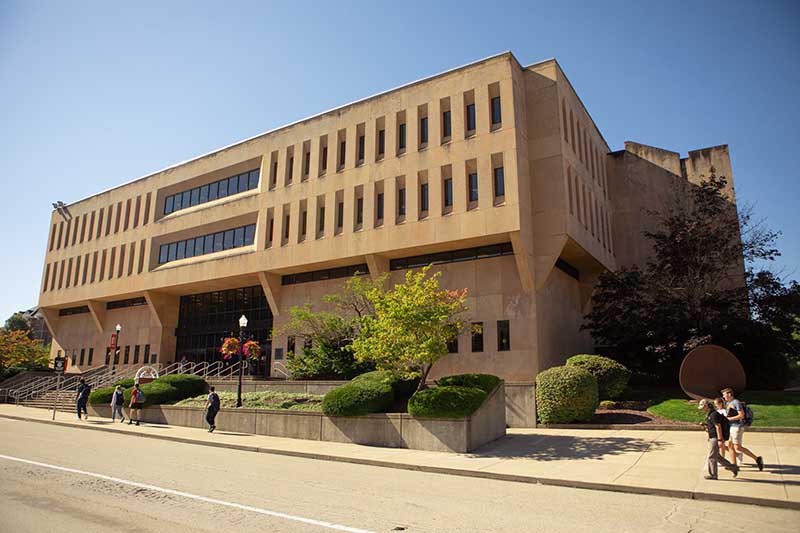
Men could be seen outside the convocation center, gathered around in bright red or jet black stiletto heels. Hand-made signs were held at each person’s side as two speakers gave powerful messages.
Jim Pflugh, Associate Dean of Students at PennWest California, gave a speech about empathy and truly understanding what it meant to walk in another’s shoes and Anne McCorkle, STARS Program Prevention Coordinator, gave statistical data about women and femme-presenting people’s experiences being victims of violence while describing the services available to everyone through SPHS’s STARS Care Center.
Walk a Mile in Her/Their Shoes is a movement meant to advocate for victims of sexual assault and gender violence, both within and outside of the LGBTQ+ community and its allies. Prior to initiating the march, students expressed their motivations for participating in the walk.
Marissa Jones, a Senior Economics major, was a volunteer that helped register students and hand out signs and shoes for men to wear. She acknowledged the common focus being placed on women when educating others about the movement:
“Okay, so walk a mile is to raise awareness for domestic violence. It’s a really important women’s issue, especially with younger relationships and college campuses. I like to volunteer because I think it’s really, really important for all younger men, men 18 to 22, to really support this issue. I think it’s important for everyone to be educated on it and it’s really, really nice to see such, like, a large group of men putting an effort towards this, and it’s nice that we’re able to support them in them supporting us.”
When asked how the LGBTQ+ community is represented in the movement, Jones provided an important, nuanced insight into how domestic violence, among the many forms of violence being advocated against, affects LGBTQ+ people in similar ways to their heterosexual peers.
“Specifically, it always talks about walk a mile in her shoes, but domestic violence impacts every type of relationship. Especially with LGBTQ+ relationships, which I believe women and women relationships have the highest rates of domestic violence. So, it’s important to recognize that, no matter what your sexuality is or no matter what relationships you’re supporting, domestic violence is apparent in all relationships and it can happen to anyone.”
Jones was accurate in her recollection. In a now deleted 2010 Intimate Partner Violence Survey conducted by the CDC, Lesbian, Gay, and Bisexual (LGB) women were “…significantly more likely than straight women to have ever experienced IPV in their lifetime, reported by 61% of bisexual women, and 44% of lesbian women, compared with 35% of straight women.” About one third of bisexual men (37.3%), versus a little over a quarter (29%) of heterosexual men, had experienced IPV in their lifetime, which was still lower statistically than women in LGB-specified relationships.
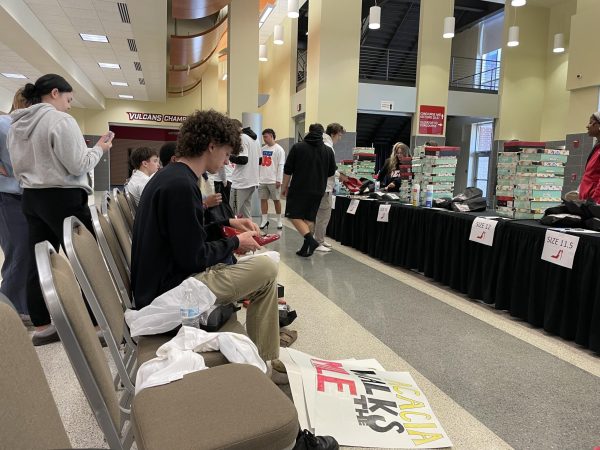
While most of the men expressed their discomfort through groans and complaints about heel sizes being too big or small, one student showed genuine investment in advocacy.
RJ Stefanyszyn, a Junior Psychology major, had a calmed expression and tone that modeled a comfortability others would follow during the march. When asked about his motivations for participating, his response was simple and straight-forward:
“I’m walking in support of domestic violence prevention and advocacy. I’m just out here with my guys trying to spread awareness and make this area a better place.”
One of the most important lessons taught during the march was empathy and respect, for both oneself and others around them.
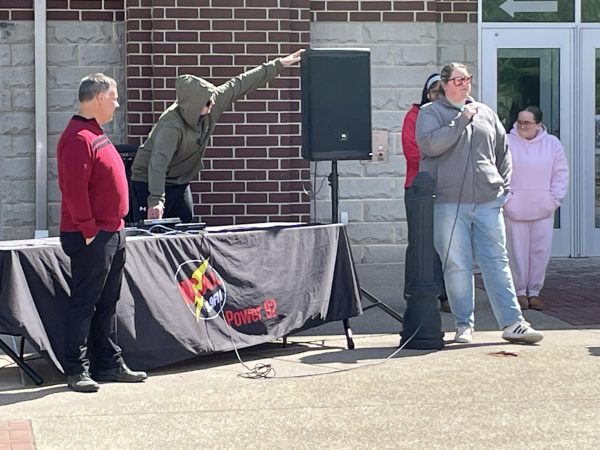
Anne Rice McCorkle, STARS Program Prevention Coordinator, described the important work being done by those at STARS Care Center and how they account for a victim’s emotional and physical safety needs:
“We are here as stars, representing our rape crisis center, because we serve students here in Washington County and Green County. We’re a free service for anybody who needs us, So we always want to get that information out. We have a really nice relationship with Cal U, Jim Pflugh in particular, keeps me engaged. We just want students to know that we’re here, and that we hope they never need us, but we’re here if they do. We are a free service that they can access. So, you know, it can be tricky for folks, if they don’t always want mom and dad to know, which I get, they wouldn’t have to know if they come to us.”
McCorkle further expressed her appreciation for the campus spreading a message of empathy, consent, and respect through the march.
“I love that Cal does these events because it’s just so important to get folks thinking about consent and what other folks go through. I loved how Jim spoke on empathy, and that’s something we’re always pushing is to be empathetic to others. Something that might not be a big deal to you, could be a huge deal to somebody else. We don’t know other people’s stories and other people’s lives. So the more we can get folks to tune into that empathy, and practice ideas of consent and respect, the more we’re helping to prevent any kind of sexual violence, and that’s always the goal.”