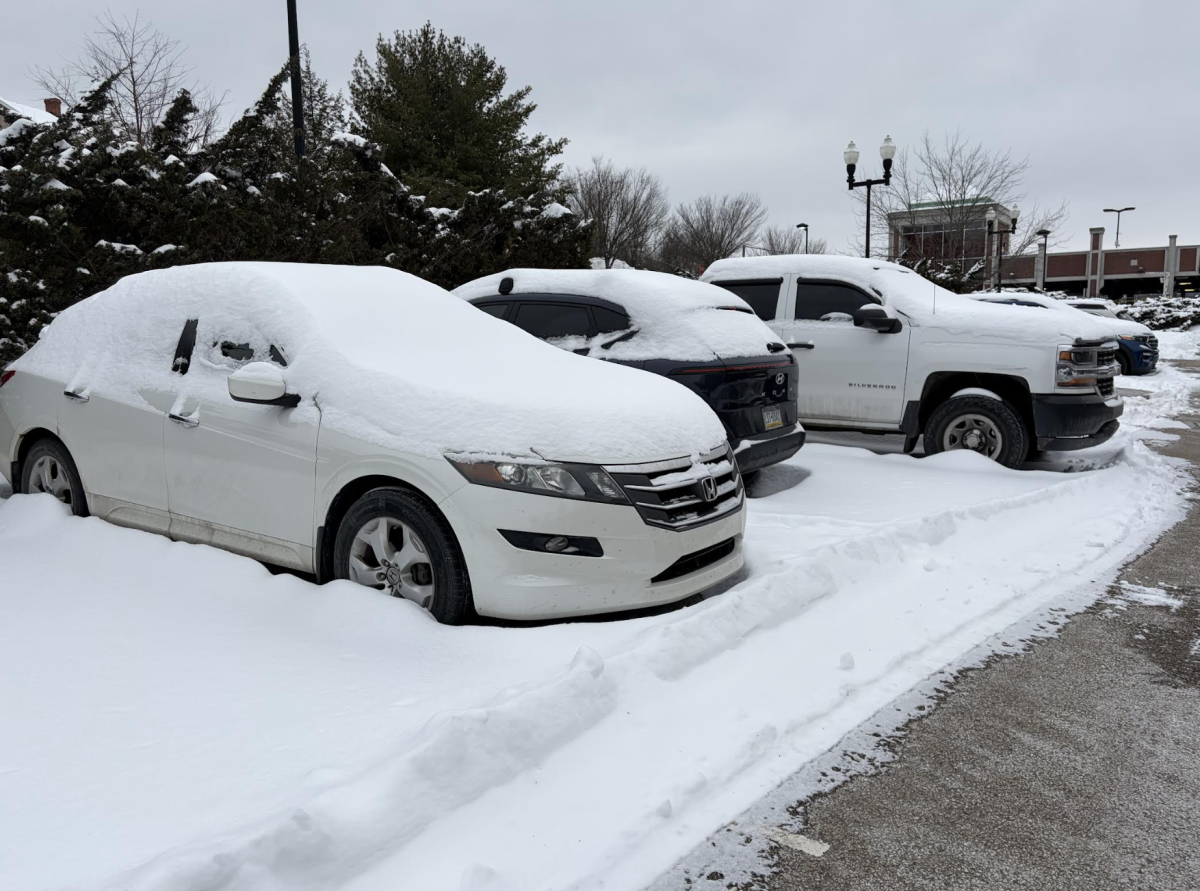
The rapid amount of snowfall Western Pennsylvania received overnight Saturday, Jan. 24 and continuing through Sunday, Jan. 25 proved to be adverse for many students and university staff.
The snowfall presented a unique challenge for PennWest Cal: students rely on the university for housing, food, and a human connection.
University Logistics
Though on-campus students were forced indoors for a few days, it wasn’t from a lack of effort from the PennWest Facilities Department.
Road crews worked diligently through Monday to clear parking lots, sidewalks, and roads throughout campus, though some areas were unable to be cleared.
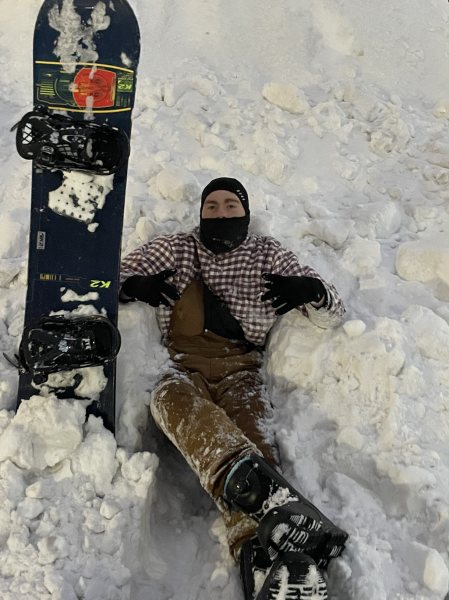
Many students were snowed in at Vulcan Village – the university’s off campus housing location – and some students chose to walk or snowboard to the dining hall on Sunday and Monday.
The Vulcan Parking Garage’s bottom exit was the only available exit; the uncovered top of the garage is blocked off as well, and remains so on Thursday.
In-person classes were pushed to a remote learning format for Monday, and all classes beginning before 11:00 AM on Tuesday were also moved remotely as per university mandate. Many professors, citing road conditions and temperatures, moved their Tuesday afternoon and Wednesday classes online as well.
Sophomore Early Childhood and Elementary Education major Emma Stefanick said the move to virtual learning was hard for her and her peers.
“My classes have been held on Zoom recently because of the weather and how cold it has been,” she said, noting that she does not like it as much: “I feel as if I do not retain the information.”
Human Connections and Memories
Stefanick said she had been anticipating the storm and preparing for some time.
“I prepared for the snow by watching the weather and coming back to campus early, so I did not get snowed in at home,” Stefanick said, saying that she still chose to eat in the dining hall as much as possible:
“I’ve been keeping connected with my friends by reaching out to who is on campus and having lunch or dinner with them,” Stefanick said.
Student Activities Board (SAB) sponsor and Assistant Director of Student Development and Engagement Darrek Harshberger commended Stefanick, the SAB Vulcan Village Chair, on her quick thinking.
“Thanks to our Vulcan Village Chair Emma buying sleds, we were able to create an event of sledding to occur,” he said. “Through thoughtful conversations, the board noted that we should offer sledding at two locations, as we did not want to risk students’ safety getting to Vulcan or vice versa.”
SAB held sledding on Sunday at Vulcan Village and Carter Hall.
“Each location had a great turnout,” Stefanick said of the sledding event.
Harshberger also partnered with the Residence Life and Housing staff to offer a challenge for on-campus students: a snowman building contest.
“When the campus closed, our university knew how important it was to keep everyone entertained, so a partnership with Res Life and SAB was created. The build-a-snowman contest was such a smart idea and we loved seeing everyone’s creativity come to life,” he said.
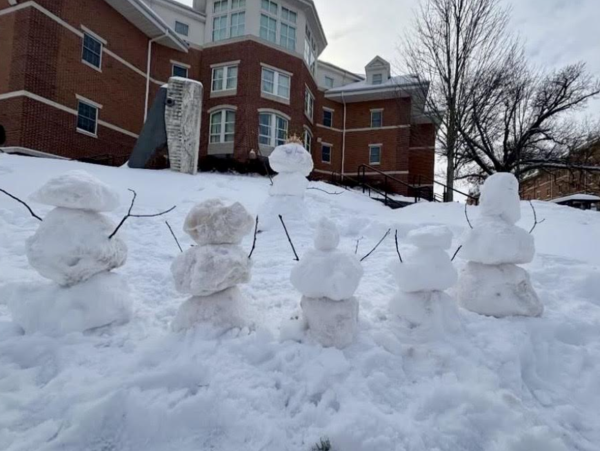
“I really encourage students to make connections in their residence hall or with their neighbors as well as their roommates. When the weather is like this it can dampen some activities and plans; it is important to look around and think about all the memories you can make with others around you,” Harshberger said, stressing the importance of human connection as well:
“I also think it is important to have some engaged events because doom scrolling will take over our whole day when we have cancellations, and it is truly important to take a break from your phone or social media sometimes.”
Dining Services’ Response
Melinda Gibson is the AVI Foodsystems Resident Director for the California Campus, and she felt that she and her dining team were prepared.
“There is not a single standard plan for an event of this nature, but our number one priority is always feeding the students. Ahead of the storm, I worked closely with my management team to map out different scenarios – who would open, who would close, how we would operate with significant call-offs, and how we would continue service if deliveries were delayed,” Gibson said.
Gibson said the facility was unable to receive a produce delivery or Sysco food truck on Monday, and was glad the team decided to bring in extra food on Friday, particularly fresh produce.
“We also ensured our emergency supplies were ready, including paper products, bottled water, and filling both propane tanks in case of a power outage.”
She said that the team experienced significant call-offs from staff.
“They were clearly told that if they did not feel safe or comfortable traveling, they should stay home,” Gibson said. Any call-offs related to the storm were not held against employees under the attendance policy due to the state of emergency.”
On Sunday and Monday, the Gold Rush Dining Hall was the only dining location open for students. Late Night Eats opened back up on Monday night, and other locations such as Umami and Flatz began receiving customers Tuesday morning.
“Based on staffing levels and safety considerations, consolidating service into one location allowed us to better serve students,” Gibson said. “After reviewing conditions and staffing again on Sunday, I made the same decision for Monday to ensure consistent service and coverage.”
On Sunday morning, the dining hall also began use of single-use utensils, plates, and cups.
“Due to limited staffing, we did not have the labor necessary to keep up with dishwashing demands at full volume. Switching to single-use materials allowed us to maintain food safety, ensure clean cookware and utensils, and continue serving students efficiently,” Gibson said.
AVI announced on Sunday afternoon that complementary hot chocolate would be available in all of the residence hall kitchens.
“We wanted to give students something comforting during a challenging snow day and show that we care about more than just providing meals – we care about their well-being,” Gibson said. “It was a simple way to bring a little warmth and positivity, and I’m glad it was well received.
The dining hall team also ran a coffee bar pop-up early in the week for students who remained on campus.
Stefanick extended a thank you to the dining services staff for their kindness.
“They always made sure that there was food for the students to eat. The hot chocolate was a nice touch,” she said. “I am appreciative of all the work that the dining people and facilities have put in…They are always so hard at work to keep everything running.”
Gibson also commended her AVI team for their efforts.
“I would like to share how proud I am of our team. They consistently rise to any challenge and go above and beyond for our students,” she said. “This situation brought out the best in our staff, strengthened teamwork, and reinforced the idea that when we work together, we can overcome anything that we put our mind to.”
Cold Weather Tips
In an email sent on Jan. 19, University Director of Safety & Risk Management Jim Dahle advised students on cold-weather procedures.
Negative wind chills and low feels-like temperatures are expected to continue for the next few days (Jan. 30 on), and students and staff should take note of the suggestions described in the email, such as dressing appropriately and monitoring the weather and temperatures.
The release also stated the primary contacts for typical issues:
“Please report any abnormal room temperatures or signs of water leaks and/or breaks immediately to your campus Facilities Department. For emergencies, please contact the PennWest Police Department on your campus. As a reminder, space heaters are not permitted in university housing.”
Students and staff are also encouraged to stay up-to-date with communication from the University.
“In case of bad weather conditions, changes to the campus’ operating schedule will be announced through the campus emergency notification system, PennWest Shield, and shared with the local news media. To enroll in PennWest Shield, you can download the new PennWest Shield Safety App or sign up in the myPennWest portal.”
Harshberger stressed the importance of staying informed.
“My big word of advice is to definitely sign up for text alerts and download the PennWest Shield App to stay connected to what important impacts are happening on campus,” he said.