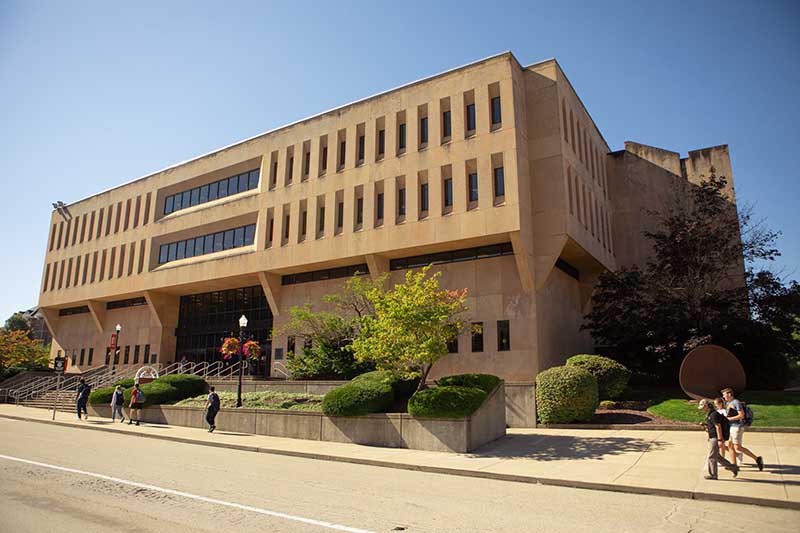
PennWest California announced earlier this month that it has officially closed its campus Printing Center, a change that sparked frustration and confusion among students who relied on its services for assignments, posters, and class projects. To help clarify the decision, University President Dr. Jon Anderson discussed the shutdown and what students can expect moving forward.
According to Dr. Anderson, the Printing Center closure was part of a larger effort to improve efficiency, reduce costs, and promote sustainability across the university:
“We continue to review all services available to faculty, staff, and students,” Dr. Anderson said. “The Printing Center was very expensive for us to run. This change helps us become more environmentally friendly and saves money in the budget.”
The move aligns with the university’s goal of reducing paper use and shifting toward more digital academic practices. While financial concerns played a role, Dr. Anderson emphasized that the decision was influenced by several factors working together.
“This wasn’t driven by one thing,” he said. “It was driven by becoming more digital, using more online tools, being more environmentally friendly, and providing relief to the budget.”
Though the Printing Center has closed, Dr. Anderson stressed that campus printing is still available to all students. PennWest now relies entirely on its network of campuswide printers located in academic buildings, residence halls, and study spaces.
“Every student gets a small printing credit each semester,” he said. “Students can print black-and-white or color, 8.5×11, 11×17, and even poster sizes on many devices.”
These printers are intended to replace the services previously offered by the Printing Center. Dr. Anderson reaffirmed that students will have access to the same file sizes, color options, and formatting capabilities they used before, now distributed across more accessible campus locations.
Students were also sent an informational email on Oct. 2 with additional details, printing instructions, and links explaining how their semester print credits work. Dr. Anderson encouraged students to revisit that message if they are unsure how to access printing resources.
While some students remain frustrated or confused, Dr. Anderson offered reassurance and emphasized the university’s commitment to open communication.
“We’re grateful that they are here,” he said. “This is one small change in a much larger set of activities happening on campus. Sometimes change is hard, but it will be more cost-effective and environmentally friendly on the other side.”
Dr. Anderson urged students to share feedback with the Student Government Association or university leadership, noting that student input is a consistent part of university decision-making.
“We meet with SGA and our student trustee representatives regularly,” Dr. Anderson said. “If students have ideas about how we can improve the experience, save money, or drive down costs, please share as many ideas as you can. We welcome any conversation.”
Though the Printing Center’s closure marks the end of a longtime service on campus, university leaders believe the shift toward digital tools and decentralized printing will ultimately contribute to a more sustainable and cost-effective future for PennWest California.